
Which Is the Biggest Desert in the World? (The Answer Isn’t the Sahara)
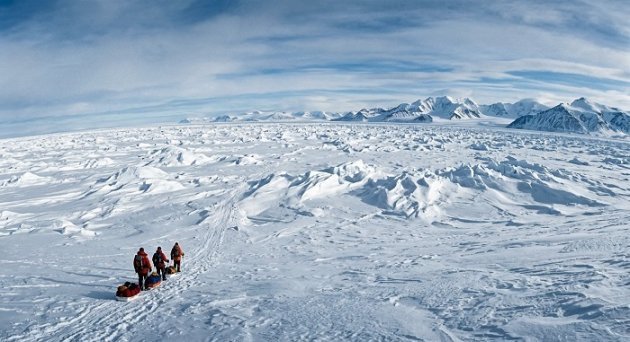
If you ask most people to name the biggest desert in the world, nine out of ten will say the Sahara. It’s a reasonable guess — the Sahara is the poster child for “desert” in movies, textbooks, and travel brochures, with its endless golden dunes and scorching heat. But the real answer surprises almost everyone: the biggest desert on Earth is Antarctica.
Yes, the icy, penguin-filled continent at the bottom of the globe technically qualifies as the largest desert on the planet — and it isn’t even close. Here’s why, and how the rest of the world’s great deserts stack up.
Which is the Biggest Dam in India? Tehri, Bhakra Nangal – Hirakud Explained (2026 Guide)
What Actually Makes a Place a Desert?
The confusion starts with a common misconception: that deserts are defined by heat. In reality, geographers and climatologists define a desert by precipitation, not temperature. A region qualifies as a desert if it receives less than about 250 millimeters (10 inches) of precipitation per year, regardless of whether that precipitation would arrive as rain, snow, or fog.
This distinction matters enormously. Under this rainfall-based definition, freezing polar regions with almost no snowfall count as deserts just as much as sun-baked sand seas do. That single rule is what pushes Antarctica — and the Arctic — to the top of the list.
Antarctica: The World’s Largest Desert
Covering approximately 14 million square kilometers (about 5.5 million square miles), the Antarctic Desert is by far the largest desert on Earth — more than 50% larger than the Sahara. Much of the Antarctic interior receives less than 50 millimeters of precipitation a year, and some regions have gone without significant snowfall for millions of years, making it not just the largest but also one of the driest places on the planet.
Despite being covered in ice up to several kilometers thick, Antarctica meets every technical criterion for desert classification. Its extreme cold means the atmosphere holds very little moisture, so almost no precipitation reaches the ground. Life here is sparse, limited mostly to hardy microbes, lichens, and, along the coasts, seals, penguins, and seabirds that depend on the surrounding ocean rather than the land itself.
The Arctic: A Close Second
Rounding out the top two is the Arctic Desert, spanning roughly 13.7 million square kilometers. Like Antarctica, the Arctic is a polar desert characterized by extremely low precipitation, vast stretches of ice, and tundra landscapes. Although it’s often overlooked in casual conversation, the Arctic is technically the world’s second-largest desert — again, well ahead of the Sahara.
The Sahara: The Largest Hot Desert
So where does that leave the Sahara? The Sahara Desert, spanning North Africa at around 9.2 million square kilometers, is the largest hot desert in the world — and the third-largest desert overall once polar deserts are factored in. It stretches roughly 4,800 kilometers from east to west, an expanse comparable to the distance from New York to Los Angeles.
The Sahara receives an average of just 25 millimeters of rainfall annually, yet it supports more life than most people expect, including olive trees, antelope, jerboas, and communities such as the Tuareg people who have adapted to its harsh conditions for centuries. Major cities like Cairo, Tripoli, and Timbuktu sit at its edges, making it one of the most historically significant deserts in human history.
When people ask “which is the biggest desert in the world” expecting a sand-dune answer, the Sahara is almost always what they have in mind — it’s simply the largest desert most of us can actually picture.
How the World’s Biggest Deserts Compare
| Rank | Desert | Type | Approximate Area |
|---|---|---|---|
| 1 | Antarctic Desert | Polar | ~14 million km² |
| 2 | Arctic Desert | Polar | ~13.7 million km² |
| 3 | Sahara Desert | Subtropical (hot) | ~9.2 million km² |
| 4 | Arabian Desert | Subtropical (hot) | ~2.3 million km² |
| 5 | Gobi Desert | Cold winter | ~1.3 million km² |
This table highlights just how dramatically the polar deserts dwarf everything else. In fact, the Antarctic Desert alone is larger than the Sahara, Arabian, and Gobi deserts combined.
Why This Distinction Actually Matters
Understanding the real definition of a desert isn’t just trivia — it reshapes how we think about roughly one-third of Earth’s land surface, which qualifies as desert terrain in some form. Recognizing polar regions as deserts helps explain phenomena like Antarctica’s remarkably low biodiversity on land, the fragility of polar ecosystems, and why climate scientists study ice sheets and precipitation patterns together rather than separately.
It also reframes how we categorize the four main desert types:
- Polar deserts – Antarctica and the Arctic, defined by cold temperatures and minimal precipitation.
- Subtropical (hot) deserts – the Sahara, Arabian, and Australian deserts, formed under high-pressure “horse latitude” belts.
- Cold winter deserts – regions like the Gobi Desert and the Great Basin in the United States, with dry summers and freezing winters.
- Cool coastal deserts – the Namib and Atacama deserts, kept dry by cold ocean currents despite their coastal location.
Each type forms through a different climatic mechanism, yet all share the same defining trait: a chronic shortage of usable water.
Final Answer: Antarctica Wins, But Context Matters
So, which is the biggest desert in the world? By strict scientific definition, it’s Antarctica, followed closely by the Arctic. If you’re asking about the biggest hot or sandy desert — the kind most people picture when they hear the word “desert” — that title belongs to the Sahara.
Both answers are correct, depending on the question you’re really asking. And that’s often the case: the “biggest” of anything usually depends on how you choose to measure it.
Which desert surprised you the most on this list? Let us know in the comments, and share this guide with anyone who still thinks the Sahara wins the size contest.
