
India is home to more than 5,200 large dams, making it one of the most dam-dense countries in the world. But ask ten people “which is the biggest dam in India?” and you’ll likely get three different answers — Tehri, Bhakra Nangal, and Hirakud. The confusion is understandable, because “biggest” can mean different things depending on whether you’re measuring height, length, or reservoir capacity.
In this guide, we break down exactly which dam wins in each category, why these structures matter to India’s economy, and what makes them engineering marvels worth knowing about.
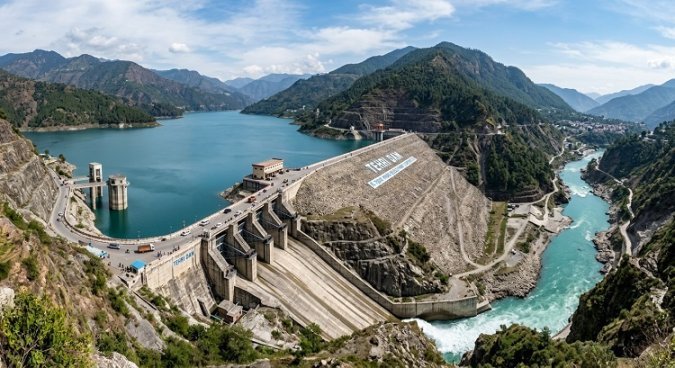
Why There’s No Single Answer to “Biggest”
Before naming a winner, it helps to understand that dams are usually ranked using three separate metrics:
- Height – how tall the dam structure stands from its foundation.
- Length – the total horizontal stretch of the dam wall.
- Reservoir capacity – how much water the dam can store.
A dam can top the charts in one category while ranking lower in another. That’s exactly what happens in India, where three different dams each claim a version of the “biggest” title.
Tehri Dam: India’s Tallest Dam
If height is your measure, the Tehri Dam in Uttarakhand takes the crown. Built on the Bhagirathi River near the town of Tehri, this rock and earth-fill embankment dam stands at approximately 260.5 meters, making it the tallest dam in India and one of the tallest dams in the world.
Construction on Tehri Dam began in the late 1970s, with the first phase completed in 2006. Today, it serves three major purposes: generating around 1,000 MW of hydroelectric power, supplying irrigation water to the plains of Uttar Pradesh, and providing drinking water to cities including Delhi.
The dam created the massive Tehri Reservoir, submerging the old Tehri town in the process — a resettlement effort that affected dozens of villages and remains one of the most discussed aspects of the project’s legacy. Despite the human cost, Tehri Dam is often cited as the answer when people search for the tallest or biggest dam in India, thanks to its sheer height and engineering scale.
Bhakra Nangal Dam: The Original Giant
Long before Tehri Dam existed, the Bhakra Nangal Dam held the title of India’s tallest dam. Built across the Sutlej River in Himachal Pradesh, this gravity dam stands roughly 225 to 226 meters high and remains the second-tallest concrete gravity dam in Asia.
Completed in phases between 1948 and 1963 with technical support from the United States Bureau of Reclamation, Bhakra Nangal was one of independent India’s first major multipurpose river valley projects. It created the Gobind Sagar reservoir, one of the largest reservoirs in the country, and its canal network irrigates over 10 million hectares across Punjab, Haryana, and Rajasthan.
Bhakra Nangal Dam also generates well over 1,000 MW of power through its associated power stations, making it a cornerstone of northern India’s agricultural and energy security. Many people still refer to it as the “largest dam in India,” a label rooted in the decades it spent as the country’s tallest structure before Tehri Dam surpassed it.
Hirakud Dam: The Longest Dam in India
If you’re measuring length rather than height, the title goes to the Hirakud Dam in Odisha. Built across the Mahanadi River near Sambalpur, Hirakud stretches an astonishing 25.8 kilometers, making it the longest dam in India and the longest earthen dam in the world.
Foundation work on Hirakud began in 1948, and the project was completed in 1957, making it one of the first major river valley developments undertaken after independence. Its primary purpose was flood control — the Mahanadi River had a history of devastating floods in the region — alongside irrigation for over 155,000 hectares of farmland and power generation for local industries.
Sardar Sarovar and Indira Sagar: The Capacity Contenders
Two more dams deserve mention when discussing “biggest” in terms of storage capacity. The Sardar Sarovar Dam on the Narmada River in Gujarat can store roughly 9.5 billion cubic meters of water and stands about 163 meters tall, supporting irrigation and drinking water supply across Gujarat, Madhya Pradesh, Maharashtra, and Rajasthan.
Meanwhile, the Indira Sagar Dam, also on the Narmada River in Madhya Pradesh, is frequently cited as having the largest reservoir by volume among Indian dams, underscoring just how many ways there are to measure “biggest.”
Quick Comparison: India’s Biggest Dams by Category
| Category | Dam | State | River | Key Stat |
|---|---|---|---|---|
| Tallest | Tehri Dam | Uttarakhand | Bhagirathi | ~260.5 m height |
| Second Tallest | Bhakra Nangal Dam | Himachal Pradesh | Sutlej | ~226 m height |
| Longest | Hirakud Dam | Odisha | Mahanadi | ~25.8 km length |
| Largest Reservoir | Indira Sagar Dam | Madhya Pradesh | Narmada | Largest storage volume |
| Largest Canal Network | Sardar Sarovar Dam | Gujarat | Narmada | ~9.5 billion m³ capacity |
Why These Dams Matter Beyond the Records
Chasing the “biggest” label can overshadow the real value these structures provide. Together, dams like Tehri, Bhakra Nangal, Hirakud, and Sardar Sarovar power millions of homes, irrigate vast stretches of farmland, control seasonal flooding, and supply drinking water to major cities. They represent decades of post-independence infrastructure planning aimed at food security and energy self-sufficiency.
At the same time, large dam projects in India have sparked ongoing debates around displacement, environmental impact, and the submergence of ecologically or culturally significant land — conversations that remain relevant as India considers new hydro and irrigation projects.
Final Verdict: So, Which Is the Biggest Dam in India?
If someone asks you point-blank “which is the biggest dam in India,” the most accurate answer depends on context:
- For height, it’s the Tehri Dam.
- For length, it’s the Hirakud Dam.
- For reservoir capacity, it’s the Indira Sagar Dam (or Sardar Sarovar, depending on the source).
- For historical significance and scale, the Bhakra Nangal Dam is often still considered India’s most iconic “biggest” dam.
Rather than a single winner, India’s biggest dams form a network of engineering achievements, each excelling in a different dimension — and each playing a critical role in the country’s water, energy, and agricultural future.
Have you visited any of these dams? Share your experience in the comments below, and let us know which one you’d add to this list.
