
Few questions have occupied philosophers, theologians, scientists, and ordinary people quite like this one: what is the meaning of life? It’s a question without a single answer, yet every generation returns to it, searching for clarity in a world full of noise. This guest post takes a tour through the major perspectives on life’s meaning — philosophical, religious, scientific, and personal — and offers a grounded way to think about the question in everyday life.
What Is the Metaverse? A Complete Guide to the Concept, Technology, and Reality in 2026
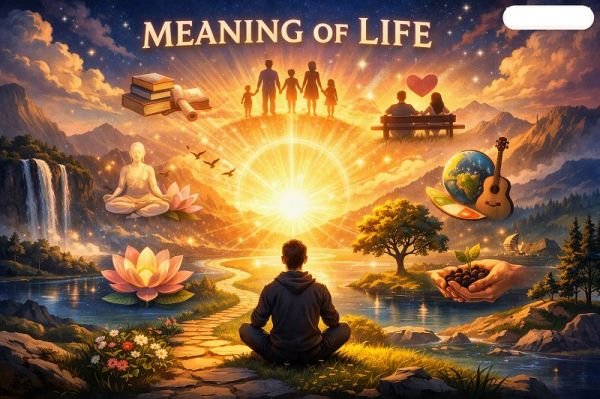
Why the Question Persists
Human beings are meaning-making creatures. Unlike most other species, we don’t just survive — we ask why we survive, and for what purpose. This drive shows up everywhere:
- Existential curiosity: Humans are the only species known to reflect on our own mortality and ask what our time here amounts to.
- Psychological necessity: Research in psychology consistently links a sense of meaning to better mental health, resilience, and life satisfaction.
- Cultural universality: Every civilization, from ancient Mesopotamia to modern societies, has developed myths, religions, or philosophies attempting to answer this question.
- Personal turning points: Major life events — birth, loss, illness, success, failure — often trigger a fresh search for meaning, even in people who never previously questioned it.
Philosophical Perspectives
Philosophy has wrestled with this question for thousands of years, producing several major schools of thought:
- Existentialism: Thinkers like Sartre and Camus argued that life has no inherent meaning — instead, individuals must create their own purpose through choices and actions. Camus famously compared life to the myth of Sisyphus, suggesting meaning can be found in the struggle itself.
- Absurdism: A close cousin of existentialism, absurdism holds that the human search for meaning inevitably clashes with a universe that offers none, and that we must learn to live with — even embrace — that contradiction.
- Nihilism: This view holds that life has no objective meaning, purpose, or intrinsic value at all. While often seen as bleak, some argue nihilism can be liberating, freeing individuals from externally imposed expectations.
- Stoicism: Ancient Stoic philosophers like Seneca and Marcus Aurelius argued that meaning comes from living virtuously, accepting what we cannot control, and focusing on what we can.
- Utilitarianism: This ethical framework suggests meaning is found in maximizing well-being and happiness — both our own and that of others.
- Aristotelian eudaimonia: Aristotle proposed that meaning comes from flourishing — living in accordance with virtue and reaching one’s fullest potential.
Religious and Spiritual Views
For much of human history, religion has offered the dominant framework for understanding life’s purpose:
- Theistic traditions: Many world religions, including Christianity, Islam, and Judaism, teach that meaning comes from a relationship with a divine creator and fulfilling a purpose set by that higher power.
- Eastern philosophies: Buddhism emphasizes the reduction of suffering and the pursuit of enlightenment, while Hinduism frames life’s meaning around dharma (duty), karma, and the soul’s journey toward liberation (moksha).
- Interconnectedness: Many spiritual traditions, from Taoism to Indigenous belief systems, emphasize harmony with nature and community as the source of a meaningful life.
- Transcendence: A common thread across religions is the idea that true meaning lies beyond material existence — in something eternal, sacred, or greater than the self.
The Scientific Lens
Science doesn’t claim to answer “why” questions the way philosophy or religion does, but it offers useful insight into how humans experience meaning:
- Evolutionary biology: From a purely biological standpoint, life’s “purpose” could be reduced to survival and reproduction — passing on genetic material to the next generation.
- Neuroscience and psychology: Studies show that a sense of purpose is linked to the release of neurochemicals like dopamine and serotonin, reinforcing behaviors tied to goals, connection, and achievement.
- Positive psychology: Researchers like Martin Seligman and Viktor Frankl (a psychiatrist and Holocaust survivor) found that people who identify a clear sense of purpose tend to show greater resilience, even in the face of extreme suffering.
- The “meaning triad”: Modern psychological research often breaks meaning into three components — coherence (life makes sense), purpose (having goals worth pursuing), and significance (feeling that one’s life matters).
Common Sources of Meaning in Everyday Life
Beyond grand theories, most people find meaning through practical, tangible experiences:
- Relationships: Connection with family, friends, and community is consistently ranked as one of the strongest predictors of a meaningful life.
- Work and contribution: Meaningful work — whether a career, caregiving, volunteering, or creative pursuits — gives people a sense of contribution and progress.
- Growth and learning: The pursuit of knowledge, skill development, and self-improvement often provides a durable sense of purpose.
- Legacy: Many people find meaning in the idea of leaving something behind — children, creative work, positive impact, or memories that outlast them.
- Presence and gratitude: Mindfulness practices suggest that meaning can also be found simply in being fully present, appreciating small moments rather than only chasing future goals.
- Overcoming adversity: Viktor Frankl’s concept of “tragic optimism” suggests that even suffering can become meaningful when it is transformed into growth, compassion, or purpose.
Is There One Right Answer?
Ultimately, most modern thinkers agree that the meaning of life is not a single universal truth waiting to be discovered, but something closer to a personal construction — shaped by culture, belief, relationships, and individual choice. This doesn’t make the question any less important; if anything, it makes it more personal and more urgent for each individual to explore.
Conclusion
The meaning of life may be one question humanity never fully answers — and perhaps that’s the point. Philosophy offers frameworks, religion offers faith, science offers insight into how meaning affects our minds and bodies, and everyday life offers the relationships, work, and small moments where meaning is actually lived out. Rather than searching for a single universal answer, most people find that meaning emerges through the ongoing process of connecting, contributing, growing, and reflecting. In the end, the search itself — the willingness to keep asking the question — may be one of the most meaningful parts of being human.
FAQs
1. Is there a single, correct meaning of life?
No single answer is universally accepted. Philosophy, religion, and science all offer different frameworks, and most people ultimately construct personal meaning through relationships, purpose, and values.
2. What did Viktor Frankl say about the meaning of life?
Frankl, a psychiatrist and Holocaust survivor, argued that meaning can be found even in suffering, particularly through purpose, love, and the attitude one chooses to take toward unavoidable hardship.
3. Does life have meaning without religion?
Yes. Secular philosophies like existentialism, stoicism, and humanism argue that individuals can create meaning through personal values, relationships, and actions, independent of religious belief.
4. How does psychology define a “meaningful life”?
Psychologists often describe meaning through three components: coherence (life makes sense), purpose (having goals), and significance (feeling that one’s existence matters).
5. Can the meaning of life change over time? Absolutely. Most people’s sense of meaning evolves across life stages, shifting with experiences like career changes, relationships, parenthood, loss, and personal growth.
