
Sending a parcel through DTDC, one of India’s most widely used courier services, seems straightforward until you’re actually holding the shipping label and unsure exactly how to fill it in. A poorly written address is one of the most common reasons for delayed deliveries, misrouted parcels, or packages that get returned to the sender entirely. Whether you’re shipping a gift, sending documents, or running an e-commerce business, knowing exactly how to write the address on a DTDC courier can save you time, money, and frustration.
This guide walks you through everything you need to know — from formatting rules to common mistakes — so your next DTDC shipment reaches its destination without a hitch.
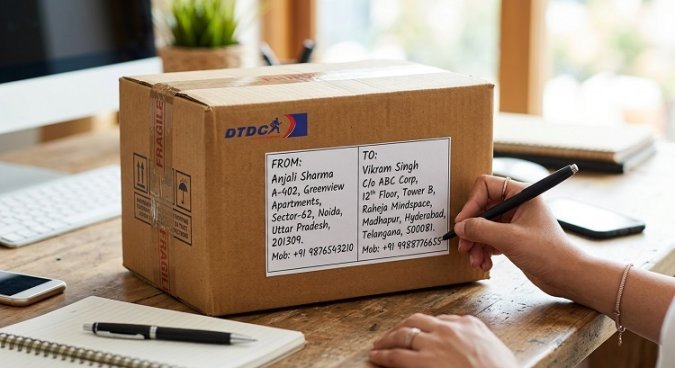
Why Correct Address Formatting Matters
Courier companies like DTDC rely on standardized address information to sort, route, and deliver millions of parcels every day. Their logistics systems, delivery hubs, and last-mile delivery agents all depend on clear, complete, and correctly formatted addresses. When an address is incomplete, illegible, or poorly structured, it can lead to:
- Delayed delivery timelines
- Parcels being sent to the wrong hub or region
- Failed delivery attempts and returned shipments
- Additional handling charges in some cases
- Frustrated customers, especially in business shipments
Getting the address format right the first time isn’t just a formality — it directly affects how quickly and reliably your parcel reaches its destination.
Basic Structure of a DTDC Courier Address
Whether you’re filling out a physical DTDC consignment note (waybill) or entering shipment details online through DTDC’s booking portal, the address structure generally follows this order:
- Full Name of the Recipient
- Flat/House Number and Building Name
- Street Name / Road / Locality
- Area or Landmark
- City
- State
- PIN Code
- Country (for domestic shipments within India, this is often optional but still recommended)
- Contact/Mobile Number
This same structure applies to both the sender’s address and the receiver’s address, which appear as separate fields on the DTDC consignment note or the online shipping form.
Step-by-Step: How to Write the Address Correctly
Step 1: Start With the Recipient’s Full Name
Always write the complete name of the person receiving the parcel — avoid nicknames or abbreviations. If the parcel is being sent to a business or office, include both the recipient’s name and the company name, for example:
Mr. Rohan Sharma
ABC Enterprises Pvt. Ltd.
Step 2: Add the House/Flat Number and Building Details
Include the flat number, house number, or building name clearly. If it’s an apartment complex, mention the block or tower number too.
Flat No. 402, Sunrise Apartments, Tower BStep 3: Mention the Street, Road, or Locality
This should include the street name, road number, or the name of the residential/commercial locality.
MG Road, Sector 14Step 4: Include a Landmark (Highly Recommended)
While not always mandatory, adding a nearby landmark significantly improves delivery accuracy, especially in areas where addresses can be confusing or newly developed.
Near City MallStep 5: Write the City and State Clearly
Spell out the city and state fully. Avoid using ambiguous abbreviations that might confuse the sorting process.
Pune, MaharashtraStep 6: Double-Check the PIN Code
The PIN code is arguably the most critical part of the address. DTDC’s automated sorting systems use PIN codes to route parcels to the correct regional hub. A single incorrect digit can send your parcel to a completely different city.
411001Always verify the PIN code using India Post’s official PIN code lookup tool or DTDC’s own serviceability checker if you’re unsure.
Step 7: Add a Valid Contact Number
A working mobile number for both the sender and receiver is essential. Delivery agents often call before attempting delivery, especially if the address is hard to locate or if the recipient isn’t available.
Sample DTDC Courier Address Format
Here’s how a complete, correctly formatted address should look on a DTDC consignment note or online form:
Receiver's Name: Ms. Anjali Verma
Address: Flat No. 302, Green Valley Apartments,
Behind City Hospital, Baner Road
City: Pune
State: Maharashtra
PIN Code: 411045
Mobile Number: 9XXXXXXXXX
Following this same structure for the sender’s details ensures that if the parcel needs to be returned for any reason, it can be routed back without issue.
Filling the Address for Online DTDC Bookings
If you’re booking a shipment through DTDC’s website or app rather than filling a physical waybill, the process is largely the same but broken into separate input fields:
- Sender Details: Name, address line 1, address line 2, city, state, PIN code, mobile number
- Receiver Details: Same fields, filled out separately
- Package Details: Weight, dimensions, and declared value (this doesn’t affect address formatting but is required for booking)
Online forms often auto-suggest the city and state once you enter a valid PIN code, which helps reduce manual entry errors.
Common Mistakes to Avoid
Even experienced shippers make address errors that cause delivery issues. Here are the most frequent mistakes to watch out for:
1. Skipping the Landmark
In many parts of India, especially smaller towns or newer residential areas, house numbering isn’t always sequential or intuitive. A landmark can be the difference between a smooth delivery and a failed attempt.
2. Writing an Incomplete or Wrong PIN Code
This is the single biggest cause of misrouted parcels. Always cross-check the PIN code rather than relying on memory.
3. Illegible Handwriting
If you’re filling out a physical consignment note by hand, write in clear block letters. Sorting staff and delivery agents need to read the address quickly and accurately.
4. Using Old or Incorrect Contact Numbers
If the mobile number listed is unreachable, delivery agents may be unable to coordinate delivery, leading to delays or failed attempts.
5. Missing Apartment or Flat Numbers
Simply writing the building name without a specific flat or house number can cause delays, especially in large apartment complexes.
6. Not Separating Address Lines Clearly
Cramming all the address information into a single unbroken line makes it harder for sorting systems and delivery personnel to parse. Break the address into logical parts: house/building, street/locality, and city/state/PIN.
Tips for Business Shippers Sending Multiple Parcels
If you regularly ship products through DTDC as part of an e-commerce or business operation, a few extra practices can help minimize address-related issues:
- Maintain a standardized address template across your order management system to ensure consistency
- Validate PIN codes automatically using an API or lookup tool before generating shipping labels
- Include GSTIN and invoice details where applicable, especially for B2B shipments
- Use printed labels instead of handwritten ones wherever possible, since printed text is far less prone to misreading
- Confirm the address with the customer before dispatch, particularly for high-value shipments
What to Do If You’ve Made an Address Error After Booking
If you’ve already booked a DTDC shipment and later realize the address contains an error, don’t panic. Depending on how far the parcel has moved through the logistics chain, you may still be able to correct it:
- Contact DTDC customer support as soon as possible with your consignment/tracking number
- Provide the corrected address details clearly
- Track the shipment status to see if it has already left the origin hub
- Be prepared for possible delays if the correction needs to be applied mid-transit
Acting quickly increases the chances of the correction being applied before the parcel reaches the delivery stage.
Final Thoughts
Writing an address correctly on a DTDC courier consignment might seem like a small detail, but it plays a major role in whether your parcel reaches its destination on time and without complications. By following a clear structure — full name, house/flat number, street, landmark, city, state, PIN code, and contact number — you significantly reduce the risk of delivery delays or misrouted shipments. Whether you’re sending a single personal parcel or managing bulk shipments for a business, taking a few extra seconds to double-check the address details is always worth the effort.
