
Every year, thousands of hikers wander off-trail and find themselves disoriented, sometimes with serious consequences. The good news? Getting lost while hiking is almost always preventable. With the right preparation, navigation skills, and situational awareness, you can explore even remote trails with confidence. Whether you’re planning your first day hike or tackling a multi-day backcountry trek, this guide walks you through everything you need to know to stay found.
Why Hikers Get Lost in the First Place
Before diving into solutions, it helps to understand the common causes. Most hikers don’t get lost because of one dramatic mistake — it’s usually a chain of small errors. Trail markers become sparse in bad weather, forks in the path aren’t clearly signed, fatigue clouds judgment, or a quick “shortcut” off the marked trail turns into an unfamiliar maze of trees and rocks. Fog, sudden darkness, and heavy snowfall can also erase visual landmarks in minutes. Recognizing these risk factors is the first step toward avoiding them.
1. Research Your Route Before You Go
Preparation begins long before your boots touch the trailhead. Study the trail map, elevation profile, and estimated hiking time. Read recent trip reports from other hikers, since trail conditions can change due to storms, fallen trees, or seasonal closures. Note key landmarks, water crossings, and junctions where the path splits. Knowing what to expect helps you immediately recognize when something feels off.
It’s also wise to check the weather forecast for the entire duration of your hike, not just the morning. Sudden fog or rain can drastically reduce visibility and make even familiar trails feel foreign.
2. Always Carry a Map and Compass — Even With GPS
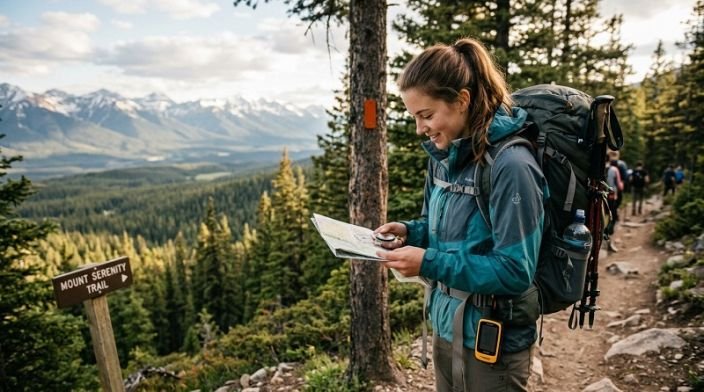
Smartphones and GPS devices are incredibly useful, but they’re not infallible. Batteries die, screens crack, and signal can disappear in canyons or dense forest. A physical topographic map and compass never run out of battery and don’t rely on satellite signal.
Learn basic map-reading skills: understanding contour lines, identifying your position relative to landmarks, and taking a bearing with a compass. These fundamentals have saved countless hikers when technology failed them.
3. Use GPS Apps and Devices Wisely
That said, GPS tools remain one of the most effective ways to stay on track. Apps like AllTrails, Gaia GPS, and OnX Backcountry let you download offline maps before you leave cell service. Some hikers also carry a dedicated GPS device or a satellite messenger, such as a Garmin inReach, which can send your location even without cell coverage.
Before heading out, download your route as a GPX file and familiarize yourself with the app’s interface. Check your position periodically rather than only when you suspect you’re off course — by the time you notice something’s wrong, you may have already wandered a significant distance.
4. Stay on Marked Trails
It sounds obvious, but trail-straying is one of the leading causes of hikers getting lost. Shortcuts, social trails made by animals or previous hikers, and off-path detours for a better photo can all lead you astray quickly. If you must leave the trail, note exactly where you departed and use visual landmarks to retrace your steps.
Pay close attention at junctions and switchbacks, where trails often diverge without obvious signage. Slow down, look for blazes or cairns (stacked rock markers), and confirm your direction before continuing.
5. Tell Someone Your Plan
One of the simplest yet most overlooked safety measures is leaving a detailed itinerary with someone you trust. Share your intended route, estimated start and finish times, and what to do if you don’t check in by a certain time. Many national parks and trailheads also have registration logs — sign them. This single step has been the difference between a quick rescue and a prolonged search in countless real-world cases.
6. Pack Navigation-Friendly Essentials
Certain gear items make it far easier to stay oriented:
- Headlamp with extra batteries – so darkness doesn’t force you to rush or panic
- Whistle – three sharp blasts is a universal distress signal
- Portable charger – keeps your phone or GPS device functional longer
- Printed map in a waterproof case – readable in rain or snow
- Brightly colored trail flagging tape (used responsibly and removed on your way back) – helpful if you need to mark a temporary route
7. Learn to Read the Land
Beyond gadgets and maps, developing a general sense of direction is invaluable. Notice which direction the sun rises and sets, observe how water flows (usually downhill toward valleys or trailheads), and pay attention to prominent landmarks like ridgelines or peaks. This situational awareness, sometimes called “terrain association,” helps you build a mental map as you hike, making it easier to notice when something doesn’t match your expectations.
8. Turn Back at the First Sign of Doubt
Confidence is good; overconfidence is dangerous. If you haven’t seen a trail marker in a while, if the path feels unfamiliar, or if weather is closing in, don’t push forward hoping things will clear up. Turning back promptly, while you still clearly remember the route behind you, is almost always the safer choice than continuing into the unknown.
9. What to Do If You Do Get Lost
Even careful hikers can occasionally lose their bearings. If it happens:
- Stop moving. Wandering further usually makes things worse.
- Stay calm and assess your surroundings.
- Retrace your steps only if you’re confident you can recognize the way back.
- Use your whistle or phone to signal for help if needed.
- Stay put if night is falling or you’re truly unsure of direction — it’s easier for rescuers to find a stationary person than someone continuing to move.
Final Thoughts
Getting lost while hiking is rarely the result of bad luck — it’s usually a preventable outcome of insufficient preparation or a lapse in attention. By researching your route, carrying reliable navigation tools (both digital and analog), staying on marked trails, and trusting your instincts when something feels wrong, you dramatically reduce your risk. The wilderness rewards those who respect it with preparation, so take these steps seriously, and you’ll be free to enjoy the trail with confidence rather than worry.
Safe travels, and happy hiking!
