
Quick Answer: To remove a wine stain, blot (never rub) the spill immediately, flush the area with cold water, then treat it with a mix of dish soap and hydrogen peroxide (for fabrics) or club soda and baking soda (for carpets and upholstery). Act within the first few minutes for the best results — dried wine stains are significantly harder to lift.
Wine stains have a reputation for being nearly impossible to remove, but that’s mostly a myth built on bad first response. The tannins and pigments in red wine set quickly, especially with heat, but with the right technique — and the right timing — most stains come out completely, even from light-colored fabric and carpet.
This guide breaks down exactly what to do, surface by surface, plus the science of why some home remedies work better than others.
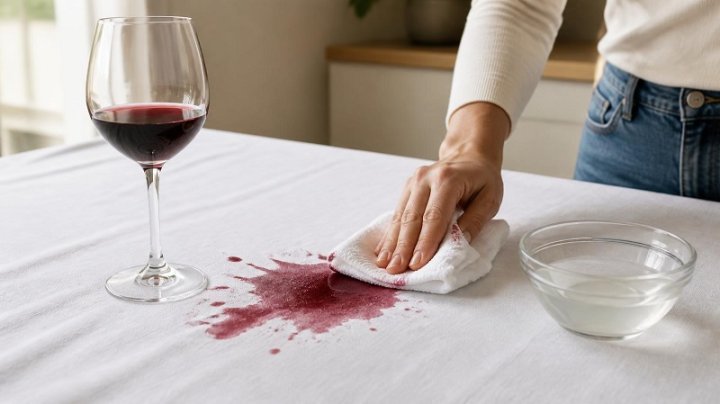
Why Wine Stains Are Hard to Remove
Wine contains three components that make it stubborn:
- Tannins — plant compounds from grape skins that bond to fibers and darken over time
- Anthocyanins — the pigments responsible for red wine’s deep color
- Sugar — which can attract dirt and make a stain sticky if left untreated
Heat and time are the real enemies here. Warm water or a hot dryer can permanently “cook” a wine stain into fabric, which is why cold water is used in nearly every removal method below.
Step-by-Step: How to Remove Wine Stains From Fabric
- Blot immediately. Use a clean cloth or paper towel to absorb as much liquid as possible. Press straight down — rubbing pushes the stain deeper into fibers.
- Flush with cold water. Run cold water through the back of the stain to push wine out rather than further in.
- Apply a cleaning solution. Mix one part dish soap with two parts hydrogen peroxide. Dab it onto the stain and let it sit for 5–10 minutes.
- Rinse and check. Rinse with cold water and inspect the spot before drying.
- Wash as usual. Launder the item according to its care label. Avoid the dryer if any trace of the stain remains — heat will set it permanently.
Note: Always spot-test hydrogen peroxide on a hidden area first, especially on colored or delicate fabrics, since it can act as a mild bleach.
How to Remove Wine Stains From Carpet
Carpet requires a slightly different approach since you can’t submerge or launder it.
- Blot up excess wine with a clean towel.
- Pour a small amount of club soda over the stain and blot again.
- Make a paste of baking soda and water, apply it to the area, and let it dry completely (usually a few hours).
- Vacuum up the dried residue.
- If a shadow remains, mix one tablespoon of dish soap with one tablespoon of white vinegar and two cups of warm water. Apply with a cloth, blot, and rinse with a damp towel.
How to Remove Wine Stains From Upholstery
For couches, chairs, and other upholstered furniture:
- Check the furniture’s cleaning code (usually found on a tag underneath cushions):
- W — water-based cleaners are safe
- S — solvent-based cleaners only, no water
- WS — either can be used
- X — vacuum only, no liquid cleaners
- For W or WS fabrics, use the same dish soap and hydrogen peroxide method as clothing, applied with a soft cloth rather than saturating the fabric.
- For S-coded fabrics, use a solvent-based upholstery cleaner and avoid water entirely.
What About White Wine Stains?
White wine doesn’t contain the same pigment load as red, but it isn’t harmless — it can still leave a faint stain that darkens and becomes visible over time, especially on light fabric or carpet. Treat white wine spills the same way you would red: blot, flush with cold water, and clean promptly. Skipping this step is a common reason “invisible” stains reappear days later.
Does Salt Really Work on Wine Stains?
Salt is a popular kitchen-table remedy, but it’s more myth than method. Salt can help absorb liquid immediately after a spill on a hard, non-porous surface, but on fabric or carpet it does little beyond drawing out some moisture — it does not lift tannins or pigment. For real removal, dish soap, hydrogen peroxide, or a dedicated enzyme-based stain remover will outperform salt every time.
How Long Can a Wine Stain Sit Before It’s Permanent?
There’s no exact cutoff, but the difference between “easy” and “difficult” often comes down to hours, not days. A fresh spill treated within 10–15 minutes usually comes out completely. A stain left overnight — particularly one exposed to heat or sunlight — may require repeated treatments or professional cleaning, and some very old stains on porous surfaces like unsealed wood or grout may never fully disappear.
Quick Reference: Wine Stain Removal by Surface
| Surface | Best First Step | Best Treatment |
|---|---|---|
| Clothing | Blot, flush cold water | Dish soap + hydrogen peroxide |
| Carpet | Blot excess liquid | Club soda, then baking soda paste |
| Upholstery | Check cleaning code | Dish soap + hydrogen peroxide (W/WS) or solvent cleaner (S) |
| Hard surfaces (wood, tile) | Wipe immediately | Mild soap and water; avoid soaking wood |
Key Takeaways
- Blot, don’t rub, and always use cold water — heat sets wine stains permanently.
- Dish soap and hydrogen peroxide work well on fabric; club soda and baking soda are better suited to carpet.
- White wine stains and salt-treated stains still need proper cleaning — don’t assume they’re gone.
- The faster you treat a wine stain, the more likely it is to disappear completely.
Need a hand with a stain you just can’t shift, or a bigger cleaning job altogether? The team at AnswersLO can help connect you with local cleaning solutions and answer everyday household questions like this one.
