
To generate B2B leads, define your ideal customer, offer something valuable in exchange for their contact details, and reach them where they already spend time, such as LinkedIn, search engines, email, and referral networks. Then follow up quickly and track which channels produce paying customers.
For a small business, the best approach is usually to pick two or three channels and do them consistently, rather than trying everything at once.
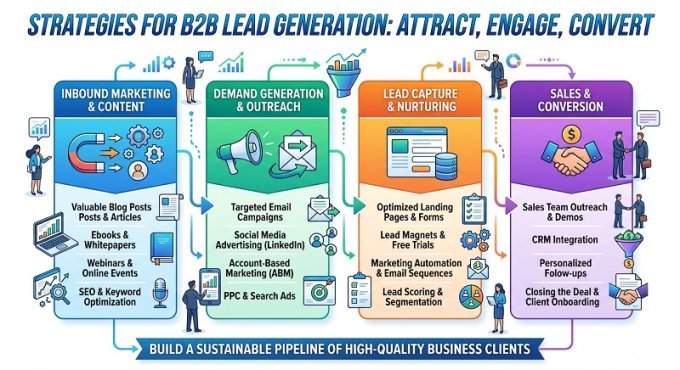
What Is a B2B Lead?
A B2B (business-to-business) lead is a company, or a person at a company, that has shown interest in what you sell or fits the profile of someone who might buy.
Leads usually fall into three stages:
- Cold lead: matches your target profile but hasn’t heard from you.
- Warm lead: has engaged with you, for example by downloading a guide or replying to an email.
- Sales-ready lead: has a clear need, budget, and timeline, and wants to talk.
Good lead generation moves people from cold to sales-ready, not just into a spreadsheet.
Why B2B Lead Generation Is Different
B2B buying is slower and more careful than consumer buying. Three things stand out:
- Several people are involved. A purchase might need approval from a manager, a finance lead, and an owner.
- Sales cycles are longer. Weeks or months between first contact and a deal are normal.
- Trust matters more. Buyers want proof you can solve their problem before they commit.
So the goal isn’t a quick sale. It’s to become the business they think of when the need arises.
Step 1: Define Your Ideal Customer Profile (ICP)
Before using any tactic, get specific about who you’re targeting. Write down:
- Industry (for example, dental clinics or logistics firms)
- Company size (employees or revenue range)
- Location
- Job title of the decision-maker
- Their biggest problem that you solve
- What they’ve tried already and why it fell short
A narrow target makes every message sharper. “We help 10–50 person accounting firms cut month-end closing time” beats “We help businesses with accounting.”
9 Proven Ways to Generate B2B Leads
1. Use LinkedIn Consistently
LinkedIn is where many B2B decision-makers are active. To use it well:
- Optimize your profile to say who you help and how, not just your job title.
- Post useful tips, short case studies, and lessons from client work.
- Connect with prospects and send a short, personal note instead of a pitch.
- Join and contribute to groups where your buyers talk.
Aim for a few useful posts a week and a handful of genuine conversations daily.
2. Create a Lead Magnet
A lead magnet is something free and valuable that people exchange their email for. Strong examples include:
- A checklist or template that saves them time
- A short guide solving one specific problem
- A calculator or audit tool
- A webinar or recorded workshop
Make it narrow and practical. A “10-point vendor contract checklist” will convert better than a vague “ultimate guide.”
3. Invest in SEO and Helpful Content
Many B2B buyers research online before talking to anyone. Publish content that answers the questions they search for:
- “How to choose [your product category]”
- “[Problem] solutions for [industry]”
- Comparisons and “alternatives to” pages
- Pricing and process explainers
Focus on topics close to a buying decision. Use clear headings and direct answers near the top of each page, which also helps your content appear in AI-generated summaries and featured snippets.
4. Run Targeted Cold Email Campaigns
Cold email still works when it’s relevant and respectful:
- Send to a small, well-researched list, not a bulk blast.
- Reference something specific about their business.
- Keep it under about 100 words with one clear ask.
- Follow up two or three times, spaced several days apart.
- Make opting out easy, and follow the email and data-protection laws that apply where you and your recipients are located.
5. Ask for Referrals and Build Partnerships
Referrals often close faster because trust is already there.
- Ask happy clients directly: “Who else do you know who struggles with this?”
- Partner with complementary businesses that serve the same customers but don’t compete, such as a web designer and a copywriter.
- Offer a simple thank-you, such as a discount or reciprocal referrals.
6. Show Up at Industry Events
Trade shows, local business meetups, and industry webinars put you in front of qualified people. Make it count:
- Research attendees beforehand and pick who to meet.
- Follow up within 48 hours while the conversation is fresh.
- Consider speaking or hosting a small session to build authority.
7. Use Google Ads or LinkedIn Ads Carefully
Paid ads can speed things up, but only after you know your message works.
- Start with a small budget and one clear offer.
- Send traffic to a dedicated landing page, not your homepage.
- Target by job title, industry, or high-intent search terms.
- Pause anything that doesn’t produce qualified leads.
8. Optimize Your Website for Conversions
Traffic means little if visitors leave without acting. Check that your site has:
- A clear headline stating who you help and what result you deliver
- A visible call to action (“Book a free call,” “Get the checklist”)
- Short forms (name, email, company is often enough)
- Testimonials, case studies, and recognizable client logos
- Fast loading and mobile-friendly design
9. Reuse Your Customer Stories
Case studies are powerful B2B marketing. A good one explains the client’s problem, what you did, and the measurable result. Share them on your site, LinkedIn, and in sales emails. Prospects trust evidence more than claims.
Which Method Should You Start With?
| If you have… | Start with |
|---|---|
| Little budget, some time | LinkedIn, referrals, cold email |
| A little budget and patience | SEO content and a lead magnet |
| Some budget, a proven offer | Paid ads plus a landing page |
| A strong existing client base | Referrals and case studies |
Choose two channels, run them for at least 60 to 90 days, then review the results.
How to Qualify and Nurture Leads
Not every lead deserves the same attention. A simple check is BANT:
- Budget: can they afford your solution?
- Authority: are they the decision-maker, or do they influence one?
- Need: do they have a real problem you solve?
- Timeline: are they looking to act soon?
For leads not ready yet, nurture them. Send a helpful email every few weeks, share a relevant case study, or check in after a set period. Many deals go to the business that stays in touch, not the one that pitched first.
Respond Fast and Keep Track
Two habits separate businesses that convert leads from those that lose them:
- Reply quickly. Contact new inquiries the same day if you can.
- Use a simple CRM. A spreadsheet works to begin with. Free or low-cost CRM tools help you log conversations, set reminders, and see where each lead stands.
Metrics to Track
You don’t need dozens of numbers. Watch these:
- Number of leads per channel
- Lead-to-customer conversion rate
- Cost per lead and cost per customer
- Average deal value
- Time from first contact to close
If a channel brings many leads but no customers, adjust your targeting or message. If a channel brings few leads but many customers, invest more there.
Common Mistakes to Avoid
- Targeting everyone. A vague audience produces weak messages.
- Pitching too soon. Lead with value, then ask for a conversation.
- Ignoring follow-up. Most deals need several touchpoints.
- Chasing too many channels. Spread thin, you’ll do none well.
- Not tracking results. Without data, you’re guessing.
- Buying low-quality email lists. They damage your sender reputation and rarely convert.
Frequently Asked Questions
What is the best way to generate B2B leads for a small business?
There’s no single best way, but a strong starting combination is LinkedIn outreach, a useful lead magnet, and referrals. They’re low cost and build trust.
How long does B2B lead generation take to work?
Expect early responses within weeks, but meaningful results often take two to three months of consistent effort, longer for SEO.
How much should a small business spend on lead generation?
It depends on margins and deal size. Start small, test one channel at a time, and scale only what produces customers at a cost you can afford.
What is a lead magnet?
A free resource, such as a checklist, template, or guide, offered in exchange for contact details.
Is cold emailing legal?
It can be, but rules vary by country. Generally you need a relevant business reason, honest sender details, and a clear way to opt out. Check the laws that apply to you.
What’s the difference between a lead and a prospect?
A lead is someone who might be interested. A prospect is a lead you’ve qualified as a good fit with a real chance of buying.
Should I use paid ads or organic marketing?
Organic methods (content, LinkedIn, referrals) cost less but take time. Paid ads are faster but need a tested offer. Many small businesses start organic and add ads later.
Final Thoughts
Generating B2B leads isn’t about doing everything. It’s about knowing exactly who you serve, offering real value, showing up consistently in a few places, and following up well. Start with one clear customer profile, pick two channels, track your results, and improve from there. Steady effort usually beats a big one-off campaign.
