
There’s a moment, standing beneath a sky torn open by ribbons of green and violet light, when the world goes quiet. No photograph, no video, no secondhand account quite prepares you for it. The Northern Lights — or aurora borealis — are one of the last truly humbling spectacles nature has to offer, and for travelers willing to brave the cold and the dark, they’re entirely within reach.
If you’ve ever typed “where can I see the Northern Lights” into a search bar at 2 a.m., dreaming of that perfect shot for your travel bucket list, you’re not alone. This guide breaks down the best destinations on Earth to witness this phenomenon, along with the practical details that separate a magical night from a frustrating one.
How to Avoid Getting Lost While Hiking: A Complete Guide for Safer Trails
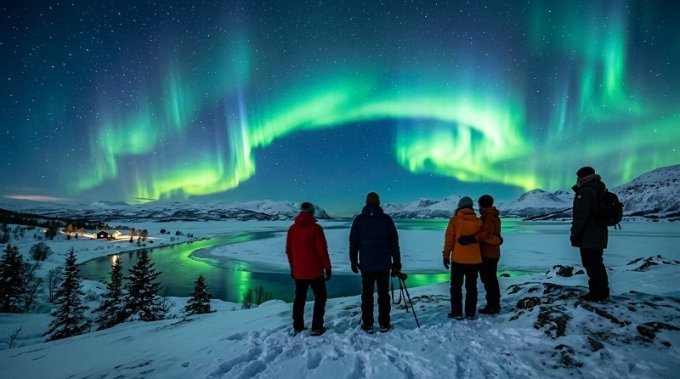
What Causes the Northern Lights?
Before you book a flight, it helps to understand what you’re chasing. The aurora borealis occurs when charged particles from the sun collide with gases in Earth’s atmosphere, creating bursts of colored light near the magnetic poles. This is why the best viewing locations cluster around the Arctic Circle, in a band known as the “auroral oval.” Solar activity, cloud cover, and darkness all play a role in whether you’ll see anything at all — which is why choosing the right destination matters as much as choosing the right dates.
1. Tromsø, Norway
Tromsø has earned its reputation as the unofficial capital of Northern Lights tourism, and for good reason. Sitting comfortably inside the auroral oval, this Arctic city offers a rare combination: reliable aurora activity and genuine creature comforts. Unlike more remote outposts, Tromsø has direct flights from major European cities, a walkable city center, and a thriving scene of guided aurora tours, husky sledding excursions, and fjord cruises.
The surrounding wilderness — think snow-draped mountains plunging into dark fjord waters — provides a jaw-dropping backdrop for the lights. Best visited between late September and late March, Tromsø rewards visitors who venture just outside the city limits to escape light pollution.
2. Fairbanks, Alaska, USA
Fairbanks sits almost directly beneath the auroral oval, giving it one of the highest probabilities of aurora sightings anywhere on the planet — locals often cite a 90%+ chance of visibility over a three-night stay during peak season. The city has built an entire tourism infrastructure around this fact, with heated aurora-viewing domes, chalets with glass ceilings, and dedicated “aurora forecast” services updated nightly.
What sets Fairbanks apart is accessibility for North American travelers: no passport hassles, English-speaking guides, and a well-developed network of lodges specifically designed for winter sky-watching. Late August through April is prime season, with the clearest, darkest skies typically in December and January.
3. Yellowknife, Northwest Territories, Canada
If you want statistics on your side, Yellowknife is hard to beat. This small Canadian city claims some of the clearest, driest winter air in North America, which translates directly into unobstructed aurora views roughly 240 nights a year. It sits beneath the auroral oval much like Fairbanks, but with a distinctly Canadian charm — think teepee-style heated viewing shelters on the shores of frozen Great Slave Lake.
Yellowknife also draws serious photographers, since the combination of low humidity and minimal light pollution produces some of the sharpest, most vivid aurora captures anywhere. Prime viewing runs from mid-November through early April.
4. Rovaniemi and Finnish Lapland
Finland offers something the other destinations don’t quite match: glass igloos. Scattered across Finnish Lapland, hotels like those near Rovaniemi and Saariselkä let visitors watch the aurora dance overhead from the comfort of a heated bed — no standing in sub-zero temperatures required. For those wanting a more active experience, reindeer sled tours and snowmobile aurora hunts are widely available.
Finnish Lapland benefits from vast stretches of untouched wilderness and minimal light pollution, and its official “Santa Claus Village” branding near Rovaniemi makes it a favorite for families combining a magical winter trip with a serious shot at aurora viewing. The season runs from late August to early April, with roughly 200 potential aurora nights per year in the region.
5. Reykjavik and the Icelandic Highlands
Iceland offers a different kind of aurora experience — one layered on top of otherworldly landscapes. Glaciers, black sand beaches, geothermal lagoons, and volcanic craters make the perfect stage for the lights, and Reykjavik’s compact size means you can be out of city light pollution within 30–40 minutes.
Many visitors base themselves in the capital and take dedicated night tours by bus or Super Jeep to dark-sky locations like Þingvellir National Park. The tradeoff for this dramatic scenery is slightly less predictable weather than Arctic mainland destinations, so flexibility in your itinerary — and a few extra nights — pays off. September through mid-April is the window to aim for.
Planning Tips for Your Aurora Trip
Time it right. Aurora activity follows an 11-year solar cycle, and forecasters expect elevated activity through the mid-2020s, making this an excellent window for sightings. Within any given season, aim for the darkest months and check real-time forecasts like the KP index before heading out each night.
Stay flexible. Even in the best locations, clouds can ruin a single night’s viewing. Book at least three to four nights in your destination to improve your odds, and choose accommodations with easy access to darker, more remote viewing spots.
Dress for serious cold. Layering matters more than any single “warmest” jacket. Base layers, insulated mid-layers, and a windproof outer shell will keep you comfortable enough to stay outside for the hours that great aurora photography often requires.
Bring the right gear. A tripod and a camera capable of manual, long-exposure settings will capture far more detail than a phone camera alone, though many modern smartphones now handle low-light photography surprisingly well.
Final Thoughts
Whether you choose the fjords of Norway, the frozen lakes of Canada, or the glass igloos of Finland, chasing the Northern Lights is as much about the journey as the destination. Each of these locations offers its own blend of scenery, culture, and odds — so pick the one that matches not just your aurora ambitions, but the kind of trip you want to have while you wait for the sky to light up.
