
ca
Getting a tooth pulled, whether it’s a stubborn wisdom tooth or a damaged molar, is one of the most common dental procedures performed today. Yet the extraction itself is only half the story. What you do in the hours, days, and weeks afterward determines how quickly you heal, how much discomfort you experience, and whether you avoid complications like dry socket or infection. Understanding the extraction aftercare basics isn’t just helpful advice, it’s the difference between a smooth recovery and a painful setback.
This guide walks you through everything you need to know about caring for your mouth after an extraction, broken down into practical, easy-to-follow steps.
What Is the Best Recovery Food? 10 Top Picks for Muscle Repair and Energy
Why Aftercare Matters So Much
When a tooth is removed, your body immediately begins forming a blood clot in the empty socket. This clot acts as a protective shield, allowing gum tissue and bone to heal underneath it. If that clot is dislodged too early, either by aggressive rinsing, sucking through a straw, or smoking, you risk developing a dry socket, a painful condition where the underlying bone and nerves are exposed to air, food, and bacteria. Proper aftercare is essentially about protecting that clot and giving your body the best possible environment to heal.
The First 24 Hours: The Critical Window
The initial day after your extraction sets the tone for your entire recovery.
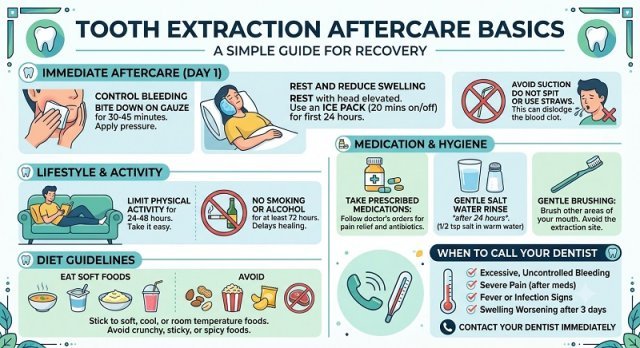
Control the bleeding. Your dentist will typically place a gauze pad over the extraction site immediately after the procedure. Bite down gently but firmly for 30 to 45 minutes to help the clot form. Some light oozing is normal for several hours, but if bleeding is heavy or continues past a few hours, replace the gauze with a fresh, slightly dampened piece and apply steady pressure again.
Manage swelling early. Applying an ice pack to the outside of your cheek in 15-20 minute intervals during the first day can significantly reduce swelling and discomfort. Swelling often peaks around the second day before gradually subsiding.
Rest and avoid exertion. Keep your head elevated, even while sleeping, and avoid bending over or lifting heavy objects. Increased blood flow to the head can dislodge the clot or increase bleeding.
Skip rinsing and spitting. As tempting as it is to rinse away the taste of blood, avoid vigorous rinsing, spitting, or swishing for at least the first 24 hours. This is one of the most important extraction aftercare basics, since disturbing the socket too soon is a leading cause of dry socket.
What to Eat and Drink
Nutrition plays a bigger role in healing than most people realize.
- Stick to soft, cool foods for the first day or two: yogurt, mashed potatoes, applesauce, smoothies (eaten with a spoon, not sipped through a straw), and lukewarm soups.
- Avoid straws entirely for at least a week. The suction can pull the clot right out of the socket.
- Stay hydrated, but drink water slowly and avoid carbonated or alcoholic beverages, which can irritate the site or interact poorly with prescribed pain medication.
- Steer clear of hot, spicy, crunchy, or chewy foods until your dentist gives the go-ahead, usually after 3-5 days, since these can scratch the wound or get lodged in the socket.
As healing progresses, you can gradually reintroduce firmer foods, but always chew on the opposite side of your mouth from the extraction site.
Oral Hygiene Without Disturbing the Site
Good hygiene is essential to prevent infection, but it needs to be gentle.
- Brush carefully, avoiding the extraction site directly for the first day, then brushing gently around it afterward.
- Rinse with warm salt water starting 24 hours after the procedure. Mix half a teaspoon of salt in a cup of warm water and gently swish, then let it fall out rather than spitting forcefully.
- Avoid mouthwash containing alcohol in the first few days, as it can irritate healing tissue.
Managing Pain and Discomfort
Some soreness is expected for several days. Over-the-counter pain relievers like ibuprofen are often effective and also help control inflammation, but always follow your dentist’s specific recommendations, especially if you’ve been prescribed medication. Take pain relievers before the local anesthetic fully wears off to stay ahead of the discomfort rather than chasing it.
Habits to Avoid During Recovery
Certain behaviors dramatically increase your risk of complications:
- Smoking or vaping — the suction motion and chemical irritants both interfere with clot formation and healing.
- Using a straw — even for water.
- Touching the site with your tongue or fingers, no matter how tempting.
- Strenuous exercise for at least 48-72 hours, since it raises blood pressure and can trigger bleeding.
Warning Signs You Shouldn’t Ignore
While mild discomfort, slight swelling, and minor bleeding are all normal, certain symptoms warrant a call to your dentist:
- Severe or worsening pain, especially 2-3 days after the extraction (a possible sign of dry socket)
- Persistent bleeding that doesn’t slow with pressure
- Fever, chills, or pus discharge, which may indicate infection
- Numbness lasting longer than expected
- Difficulty swallowing or breathing
Catching these issues early makes treatment far simpler, so don’t hesitate to reach out if something feels off.
How Long Does Full Recovery Take?
Soft tissue typically heals within 1-2 weeks, while the bone underneath can take several months to fully remodel. Most people return to normal eating and activity within a week, though wisdom tooth extractions, especially impacted ones, may take slightly longer due to the more invasive nature of the procedure.
Final Thoughts
Mastering the extraction aftercare basics doesn’t require medical expertise, just a bit of patience and attentiveness during the healing window. Protecting the blood clot, eating soft foods, keeping the area clean without disturbing it, and watching for warning signs are the pillars of a smooth recovery. When in doubt, your dentist’s office is always the best resource for personalized guidance, so don’t hesitate to call if something feels unusual. With the right care, most people are back to their normal routine within a week, with nothing to show for it but a healthier smile.
