
How to Make Oat Milk at Home: The Ultimate Beginner’s Guide
Oat milk has taken over coffee shops, grocery store shelves, and breakfast tables everywhere — and for good reason. It’s creamy, naturally sweet, environmentally friendly, and free from common allergens like nuts and dairy. But did you know you can make it yourself at home in under five minutes, using just two ingredients you probably already have in your pantry?
In this guide, you’ll learn exactly how to make oat milk from scratch, avoid the common mistakes that lead to slimy or gritty results, and discover tips to customize it to your taste.
Why Make Your Own Oat Milk?
Store-bought oat milk is convenient, but making it at home comes with real benefits:
-
- Cost savings: A batch of homemade oat milk costs a fraction of the price of store-bought cartons.
- No additives: Many commercial brands include gums, oils, and preservatives. Homemade oat milk contains only what you put in it.
- Customizable: Adjust the sweetness, thickness, and flavor exactly how you like it.
- Eco-friendly: Less packaging waste and a smaller environmental footprint than dairy or many other plant milks.
- Quick and easy: No soaking required, unlike almond or cashew milk.
What You’ll Need
Ingredients
- 1 cup rolled oats (old-fashioned oats work best; avoid steel-cut or instant oats)
- 4 cups cold water
- Optional add-ins: pinch of salt, 1–2 pitted dates or 1 tablespoon maple syrup, 1 teaspoon vanilla extract, pinch of cinnamon
Equipment
- A blender (any standard blender works)
- A fine mesh strainer, nut milk bag, or cheesecloth
- A large bowl or pitcher
- An airtight storage container (glass jar or bottle recommended)
Step-by-Step Instructions
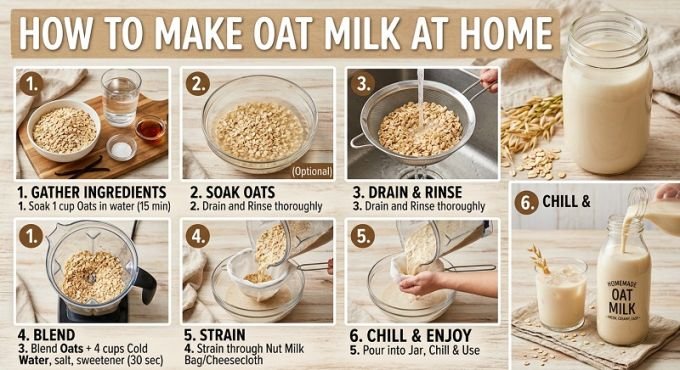
Step 1: Add Oats and Cold Water to the Blender
Combine 1 cup of rolled oats with 4 cups of cold water in your blender. Using cold water is important — it helps prevent the oats from releasing too much starch, which is the main culprit behind slimy oat milk.
Step 2: Blend Briefly
Blend on high speed for just 30 to 45 seconds. This is a critical step: over-blending breaks down the oats too much and causes excess starch release, resulting in a slimy, gluey texture. You want the oats to be broken down enough to extract their milky liquid, but not pulverized into a fine paste.
Step 3: Strain the Mixture
Pour the blended mixture through a nut milk bag, cheesecloth, or fine mesh strainer set over a large bowl or pitcher. Gently squeeze or press to extract as much liquid as possible, but avoid squeezing too hard, which can push extra starch through and make the milk cloudy or slimy.
Step 4: Sweeten and Flavor (Optional)
If you’d like a slightly sweeter or more flavorful milk, blend the strained liquid briefly with a pinch of salt, a date or maple syrup, and a splash of vanilla extract. This step is entirely optional — plain oat milk works great in savory dishes and coffee.
Step 5: Store and Enjoy
Pour your finished oat milk into an airtight glass container and refrigerate. It’s ready to drink immediately, whether on its own, in coffee, over cereal, or in smoothies.
How Long Does Homemade Oat Milk Last?
Homemade oat milk typically stays fresh for 4 to 5 days in the refrigerator when stored in a sealed container. Since it contains no preservatives, it will naturally separate over time — simply shake well before each use. If you notice a sour smell or off taste, it’s time to discard it.
Common Mistakes to Avoid
- Using hot water – Hot water breaks down starches faster, leading to slimy milk. Always use cold water.
- Over-blending – Blending for too long releases excess starch. Stick to 30–45 seconds.
- Skipping the strain – Straining removes the gritty oat pulp, giving you a smooth, drinkable texture.
- Squeezing too hard – Light to moderate pressure is enough; aggressive squeezing can push starch through the strainer.
- Using the wrong oats – Steel-cut oats take too long to break down properly, while instant oats can turn mushy and overly starchy. Rolled oats strike the perfect balance.
Creative Ways to Use Your Homemade Oat Milk
- Coffee and lattes: Oat milk froths beautifully, making it a favorite for homemade lattes and cappuccinos.
- Smoothies: Use it as a creamy base for fruit or green smoothies.
- Baking: Substitute oat milk in most recipes that call for dairy milk, including pancakes, muffins, and cakes.
- Cereal and oatmeal: Pour it over your morning cereal for a naturally sweet, oat-forward flavor.
- Savory cooking: Use unsweetened oat milk in soups, sauces, or mashed potatoes for a dairy-free creamy texture.
What to Do With Leftover Oat Pulp
Don’t toss the leftover oat pulp from straining — it’s packed with fiber and can be repurposed:
- Add it to baked goods like muffins or cookies
- Mix it into oatmeal for extra texture
- Use it as a thickener in soups or smoothies
- Dry it out and use it as a base for homemade granola
Frequently Asked Questions
Can I make oat milk without a strainer? Technically yes, but the texture will be much thicker and grainier. Straining is highly recommended for a smooth, drinkable consistency.
Why is my oat milk slimy? Slimy oat milk usually results from using hot water, over-blending, or over-squeezing during straining. Follow the tips above to avoid this.
Is homemade oat milk as nutritious as store-bought? Homemade oat milk is naturally rich in fiber and carbohydrates from the oats. Store-bought versions are often fortified with vitamins like B12, D, and calcium, which homemade versions lack unless you add them yourself.
Can I freeze oat milk? Freezing is possible but can affect the texture, causing separation upon thawing. It’s best enjoyed fresh within a few days.
Final Thoughts
Making oat milk at home is one of the easiest plant-based milk recipes you can master, requiring just two basic ingredients and five minutes of your time. Once you get the cold water and quick-blend technique down, you’ll never look at store-bought cartons the same way again. Try it once, and you may find yourself making a fresh batch every week.
Have you tried making your own oat milk? Share your favorite flavor combinations and tips in the comments below!
